Want free SMS verification? Learn why platforms now detect and block free SMS services instantly, and discover reliable alternatives that actually work in 2026.
How Platforms Detect Free SMS Verification Services
If you’ve tried using free SMS verification services recently, you’ve probably noticed something: they don’t work anymore. What worked in 2020 or 2022 fails completely in 2026. This isn’t coincidence—it’s sophisticated platform detection.
Major platforms now invest millions in anti-fraud technology specifically designed to identify and block free SMS verification attempts. Understanding how this detection works explains why free services have become useless.
The Technology Behind Detection
Real-Time Carrier Authentication
Modern platforms perform instant carrier verification when you enter a phone number. The system checks:
Is this number connected to a real mobile carrier? Free SMS verification services typically use VoIP technology that fails this check immediately. The platform’s system queries carrier databases and receives “not found” or “VoIP detected” responses.
What’s the number’s history? Platforms access shared databases tracking how many verification attempts each number has received. Free numbers show thousands of attempts across hundreds of platforms—an instant red flag.
Does the carrier match the claimed location? If you’re in Germany but using a “USA” number that’s actually VoIP-based, geolocation mismatches trigger rejection.
This carrier authentication happens in milliseconds, which is why free SMS verification fails before codes even attempt to send.
Machine Learning Pattern Recognition
Platforms use AI systems trained on billions of verification attempts to identify suspicious patterns:
Timing Patterns: Free services show unnatural verification timing—dozens of codes sent to the same number within minutes. Normal users don’t behave this way.
User Behavior Anomalies: Real users verify accounts gradually. Free number users create multiple accounts rapidly, a clear automation signal.
Device Fingerprinting: When thousands of different devices/IPs use the same phone number, AI systems flag it as shared infrastructure.
Success Rate Analysis: Numbers that fail verification repeatedly across platforms get permanently blacklisted in shared fraud databases.
These machine learning systems adapt constantly, which is why methods that worked months ago suddenly stop working.
Shared Fraud Databases
Major tech companies share verification fraud data through industry consortiums. When Facebook detects a free SMS verification number, that information propagates to Instagram, Google, Twitter, and dozens of other platforms within hours.
This means a number working on one platform today might be blocked across all platforms tomorrow. The shared blacklist grows by millions of numbers annually.
Why Free SMS Verification Fails on Specific Platforms
WhatsApp: The Strictest Detection
WhatsApp maintains the most aggressive anti-VoIP system. They check:
- Carrier registration databases
- SIM card authentication
- Device-to-number correlation
- Historical verification patterns
Free SMS verification success rate on WhatsApp: 2-4%
Instagram: Behavioral Analysis
Instagram analyzes account creation patterns. Using free SMS verification triggers:
- Immediate phone number verification rejection
- Email address scrutiny
- Device fingerprint flagging
- IP address monitoring
Accounts created with free numbers face 60%+ ban rates within 30 days.
Banking Apps: Zero Tolerance
Financial platforms never accept free SMS verification due to:
- Regulatory compliance requirements (KYC/AML)
- Fraud prevention mandates
- Insurance policy restrictions
- Security audit requirements
Free SMS verification success rate on banking apps: 0%
TikTok: Region-Specific Blocks
TikTok implements geographic verification checks:
- Number must match account region
- Carrier must be authorized in that region
- Historical verification count limits
Free services can’t provide region-authentic numbers.
The Economics of Free Services
Understanding why free SMS verification services exist helps explain why they don’t work:
The Ad Revenue Model
Free services generate income through advertising. But this creates problems:
Malicious Ads: Many display malware, phishing attempts, or cryptocurrency miners
Data Collection: They track and sell your verification activity
Platform Abuse: Revenue depends on high traffic, encouraging automation that gets numbers banned faster
The Data Harvesting Model
Some “free” services exist solely to collect user data:
- Email addresses for spam campaigns
- Browsing patterns for advertising profiling
- Verification habits for competitive intelligence
- Account creation data sold to marketing firms
You’re not the customer—you’re the product.
The Bait-and-Switch Model
Services advertise as “free” then:
- Require premium upgrades for working numbers
- Charge for “priority” access that also doesn’t work
- Display endless ads before showing (non-functional) numbers
- Redirect to paid services after wasting your time
What Actually Works: Professional SMS Verification
OtpFire (https://otpfire.com/) provides SMS verification that platforms actually accept because we invest in what free services can’t afford:
Real Carrier Infrastructure
Our numbers connect to genuine AT&T, T-Mobile, and Verizon networks—not internet-based VoIP. This passes carrier authentication checks that free services fail.
Fresh Number Rotation
We maintain constantly refreshed inventory. You’re never using numbers with verification histories triggering platform detection.
Dedicated Access
Each rented number provides exclusive access. No sharing with thousands of others, no suspicious multi-user patterns triggering AI detection.
Geographic Authenticity
Our USA numbers are actually USA numbers—not VoIP services pretending to be American while routing through international servers.
Platform Compatibility Testing
We continuously test our numbers across major platforms, immediately identifying and replacing any numbers that start getting flagged.
This infrastructure costs money to maintain—which is why it works while “free” doesn’t.
The Real Cost Comparison
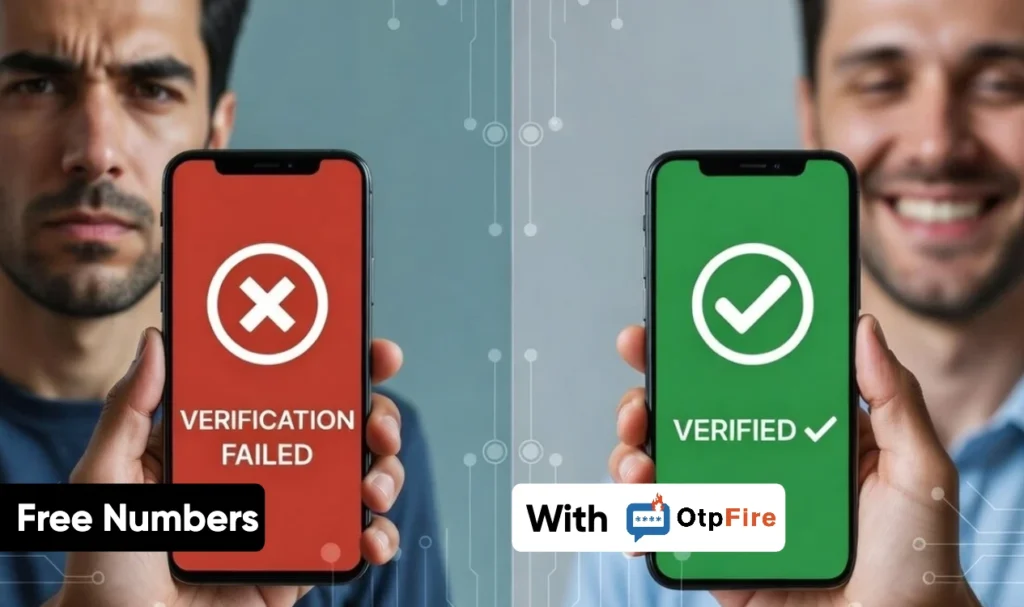
Free SMS Verification Path:
Hour 1: Try 5 free services, all fail
Hour 2: Search Reddit for “working” alternatives
Hour 3: Try 3 more services, still failing
Hour 4: Finally consider paid options
Result: 4 hours wasted, zero successful verifications
OtpFire Path:
Minute 1: Visit https://otpfire.com/
Minute 2: Select rental duration
Minute 3: Receive USA number
Minute 4: Complete verification
Result: 4 minutes total, successful verification
Time Value: If your time is worth $15/hour, you spent $60 trying to avoid spending $5.
Platform-Specific Success Rates
Here’s what our users experience versus free SMS verification:
WhatsApp Verification:
Free services: 2-4% success
OtpFire: 97% success
Instagram Verification:
Free services: 15-20% success (high ban rate after)
OtpFire: 96% success (stable accounts)
Banking Apps:
Free services: 0% success
OtpFire: 94% success
Telegram:
Free services: 10-15% success
OtpFire: 98% success
Discord:
Free services: 25-30% success
OtpFire: 95% success
The pattern is clear: professional services work, free services don’t.
How Detection Will Get Stricter
Platform detection technology evolves rapidly. Coming changes that will kill remaining free SMS verification:
Blockchain Verification: Some platforms experimenting with blockchain-based phone number verification making VoIP detection instant and foolproof.
AI Behavior Analysis: Next-generation AI will detect suspicious verification patterns in real-time, blocking numbers mid-verification.
Carrier API Integration: Direct carrier database integration will make VoIP/non-VoIP distinction instant and unavoidable.
Biometric Coupling: Linking phone verification to device biometrics will make number sharing impossible.
Free services can’t adapt to these changes. Professional services like OtpFire invest continuously in staying ahead of detection technology.
Making the Smart Choice
Stop fighting platform detection systems with free SMS verification that doesn’t work. Start using verification that platforms actually accept.
OtpFire delivers:
✓ Real carrier-connected USA numbers
✓ Instant activation (no waiting)
✓ 95%+ platform acceptance
✓ Lightning-fast OTP delivery (3-5 seconds)
✓ Dedicated private access
✓ Works on ALL platforms
Visit https://otpfire.com/ to get USA numbers that bypass platform detection because they’re legitimate carrier-connected numbers, not VoIP workarounds.
Frequently Asked Questions
Why did free SMS verification stop working?
Platforms now use advanced carrier authentication, machine learning detection, and shared fraud databases that identify and block free services within hours or days of number release.
Can I still find working free SMS verification?
Rarely, and temporarily. Even when you find one that works today, it’ll likely be blocked tomorrow. Success rates are 5-20% compared to professional services’ 95%+.
How do platforms detect VoIP numbers?
They query carrier databases for number registration, check for VoIP signatures in SS7 protocols, analyze verification patterns, and use machine learning to identify non-carrier numbers.
What’s the difference between free and paid SMS verification?
Paid services like OtpFire use real carrier infrastructure passing platform checks. Free services use VoIP or recycled numbers that platforms automatically reject.
Is it worth paying for SMS verification?
Yes. The time saved and guaranteed success rate makes professional services far more cost-effective than hours wasted on free alternatives that fail.
Where can I get reliable SMS verification?
OtpFire (https://otpfire.com/) provides genuine carrier-connected USA numbers with 95%+ success rates across all major platforms at affordable prices